
Flexible working hours, home office and workation
We always say: What counts is the result and not whether you are present in the office from 8:00 am to 5:00 pm. That is why our team can arrange their time independently and flexibly.




Location
India

Compensation
Junior to Mid Level
brutto/monatlich

On site Setup
40 h weekly
In this role you will act as a Computer Vision Engineer to build and deploy high-performance vision systems for object detection, OCR and vision-language model (VLM) workflows. You will own model development from data strategy through training, optimization and production deployment with strong engineering standards and measurable impact in real-world use.
Competitive Salary
Instead of corporate policy, you will find collaboration with committed people on an equal footing. Mutual respect and appreciation are very important to us. Our family-like working environment provides the framework for close teamwork and allows sufficient freedom for the individual development of all employees. In the right environment, work is fun—our benefits play a secondary role.
We always say: What counts is the result and not whether you are present in the office from 8:00 am to 5:00 pm. That is why our team can arrange their time independently and flexibly.

It is important to us that our employees have everything they need at their workplace. We are happy to provide our employees with their own notebook, company telephone, etc. if required.

Our employees should always be up to date. That’s why we cover up to 100% of the costs of training and continuing education. Also for books and technical literature.

A fit mind is related to a fit body. That’s why we are happy to pay the participation fee when our team takes part in sports events together.

Sometimes you just need some fun to get back to full power at work. That’s why you can find our team now and then at the football table in our fun corner.

Our employees are often faced with tough challenges, and successes should be celebrated appropriately. That is why we attach great importance to joint employee events.

Stay fit and eco-friendly with JobRad – whether you’re commuting to work or riding in your free time. Through CADS, you can easily lease the bike of your choice.

Fresh snacks and meals right at the office every day? The “Schrankerl” fridge makes it easy – and we cover 20% of the cost for you!

Diverse and forward-looking projects that use innovative technologies to shape medical technology in the long term and make your everyday work exciting.

Free parking in Perg and Ansfelden, and close proximity to the train station.

Group health insurance with premium advantages
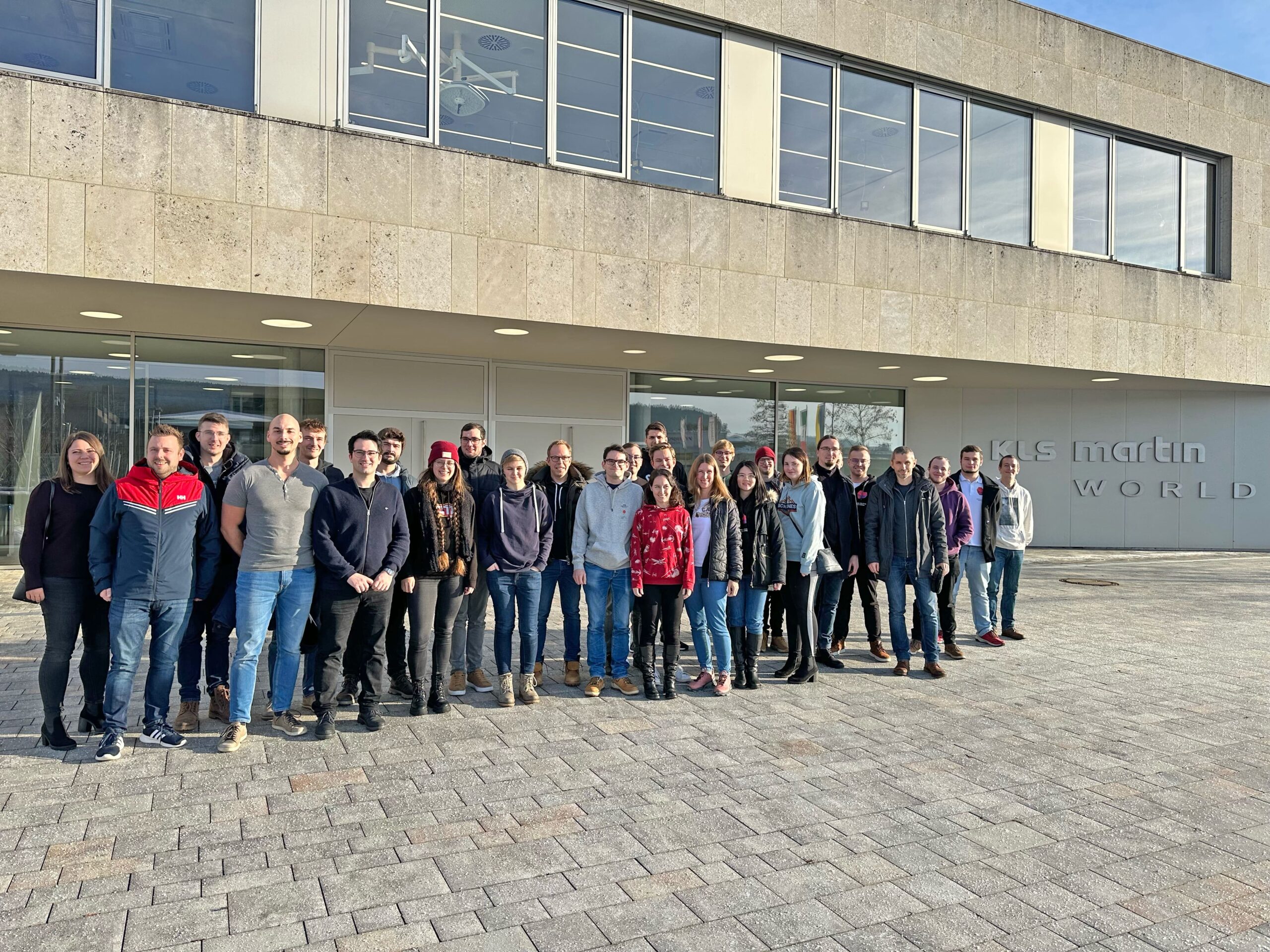
CADS GmbH, based in Perg, in collaboration with the KLS Martin Group, is the world’s leading medical device manufacturer for surgical innovation with its visionary software solutions for professional use.
Digital Health is our Passion. This passion has been the basis of our success for 15 years and makes us a very special employer. We create groundbreaking software solutions that benefit patients and physicians worldwide.
We are constantly working on new developments and industry solutions and see the ideas, skills and potential of our employees as a central component.
You would like to join us on this path and contribute to helping people with your work? Then we would be happy to get to know you and welcome you to our team.
Interested? Write us now!